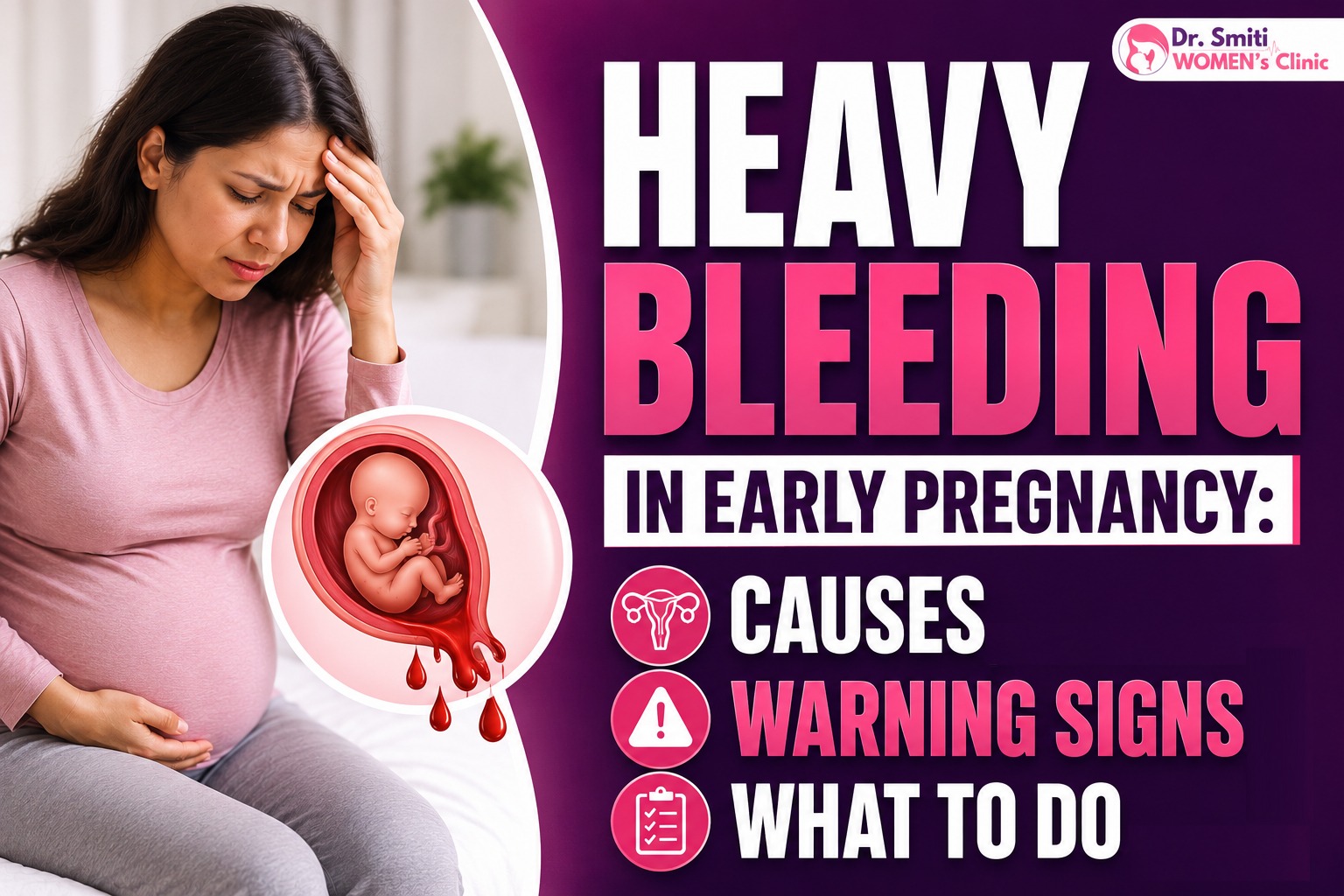
Bleeding during early pregnancy can be frightening, especially when you are unsure whether it is normal or a sign of a serious problem. Although early-pregnancy spotting is fairly common, heavy bleeding requires prompt medical attention.
Bleeding can range from a few spots of pink or brown blood to bright-red bleeding that soaks a sanitary pad. The cause can be harmless, but it can also be associated with miscarriage or ectopic pregnancy. This is why any significant bleeding in early pregnancy should be discussed with an obstetrician or gynecologist promptly.
What Is Bleeding or Spotting in Early Pregnancy?
Spotting in early pregnancy means seeing a small amount of blood on your underwear, toilet paper, or a panty liner. Spotting may appear pink, brown, or light red in color.
Bleeding during early pregnancy can be heavier and may require a sanitary pad. It can sometimes be accompanied by abdominal cramps, backache, blood clots, or tissue.
Early pregnancy bleeding is relatively common, and bleeding does not automatically mean that you are having a miscarriage. However, the amount of bleeding, its color, associated symptoms, and the stage of pregnancy can help your doctor determine what may be happening.
Is Spotting During Early Pregnancy Normal?
There are several possible causes of light spotting in early pregnancy, and some are not serious.
Possible causes include:
- Implantation-related bleeding
- Hormonal changes during pregnancy can make the cervix more sensitive and cause spotting.
- Light bleeding may also occur following sexual intercourse during pregnancy.
- Bleeding following a pelvic examination
- Certain vaginal or cervical infections
- A small subchorionic hematoma
However, never assume that every episode of spotting is harmless. Contact your healthcare provider if you experience bleeding during pregnancy, particularly if it becomes heavier or is associated with pain.
What Causes Heavy Bleeding in Early Pregnancy?
There are several possible causes of heavy bleeding in early pregnancy. Some require urgent medical treatment.
1. Miscarriage
A miscarriage is one of the important causes of bleeding in the first trimester. Bleeding may be light initially and become heavier, and some women may pass blood clots or pregnancy tissue.
Other possible symptoms include:
- Strong abdominal or pelvic cramps
- Lower back pain
- Passing tissue or clots
- Decreasing pregnancy symptoms
Heavy bleeding does not always mean a miscarriage, so medical evaluation is necessary to determine what is happening.
2. Ectopic Pregnancy
An ectopic pregnancy occurs when a fertilized egg implants outside the main cavity of the uterus, most commonly in a fallopian tube.
This can become life-threatening if the pregnancy causes the tube to rupture.
Seek emergency medical care if bleeding during early pregnancy occurs together with:
- Severe or worsening abdominal pain
- Pain mainly on one side
- Shoulder-tip pain
- Dizziness or fainting
- Extreme weakness
- Heavy vaginal bleeding
3. Subchorionic Hematoma
A subchorionic hematoma occurs when blood collects between the pregnancy sac or membranes and the uterine wall. It can cause vaginal spotting or bleeding.
Small hematomas may resolve on their own, while larger ones may require closer monitoring by your healthcare provider.
4. Cervical Changes
Pregnancy causes increased blood flow and hormonal changes in the cervix, making it more sensitive. This can sometimes cause light bleeding, particularly after sexual intercourse or a pelvic examination.
Cervical irritation generally causes spotting in early pregnancy rather than heavy bleeding, but persistent bleeding should still be evaluated.
5. Infections
Some vaginal or cervical infections can cause bleeding or spotting. Your doctor may recommend an examination and appropriate testing if an infection is suspected.
6. Sometimes, No Clear Cause Is Found
In some pregnancies, doctors may not be able to identify an exact cause of early pregnancy bleeding. If the ultrasound and other assessments are reassuring, the pregnancy may continue normally.
How Much Bleeding Is Too Much in Early Pregnancy?
The amount of bleeding matters, but there is no single amount that can determine whether a pregnancy is safe or unsafe.
Heavy bleeding in early pregnancy requires urgent medical assessment, especially if you are soaking through approximately two sanitary pads in an hour, passing large clots or tissue, or experiencing significant pain.
Do not wait for the bleeding to stop if you also have symptoms such as dizziness, fainting, severe abdominal pain, or shoulder pain.
What Should You Do If You Have Heavy Bleeding in Early Pregnancy?
If you experience heavy bleeding:
- Use a sanitary pad rather than a tampon so you can monitor the amount of bleeding.
- Note the color and approximate amount of blood.
- Pay attention to clots, tissue, cramps, or abdominal pain.
- Contact your obstetrician or gynecologist promptly.
- If the bleeding is heavy or you have severe pain, dizziness, fainting, or weakness, seek emergency medical care immediately.
- If pregnancy tissue passes, ask your healthcare provider whether it should be saved for examination.
Avoid delaying medical care because you are unsure whether the bleeding is serious.
How Is Early Pregnancy Bleeding Diagnosed?
Your doctor will determine the cause based on your symptoms, pregnancy stage, examination, and test results.
Depending on your situation, your healthcare provider may recommend:
- A pelvic examination
- Pregnancy hormone blood tests, such as quantitative hCG
- An ultrasound scan
- Blood group and Rh testing
- Additional tests if an infection or another condition is suspected
An ultrasound can help determine the location and development of the pregnancy and look for possible causes of bleeding.
Does Bleeding Always Mean Miscarriage?
No. Bleeding in the early stages of pregnancy does not necessarily indicate a miscarriage. Some women experience spotting or light bleeding and continue to have a healthy pregnancy. At the same time, bleeding can sometimes be an early warning sign of miscarriage or ectopic pregnancy.
The only way to understand the cause is through appropriate medical assessment.
It is also important to remember that most early miscarriages are not caused by something a woman did. In many cases, miscarriage happens because the pregnancy was not developing normally.
Spotting vs. Heavy Bleeding in Early Pregnancy
| Spotting | Heavy Bleeding |
| A few drops or spots of blood | Flow that requires frequent pad changes |
| May appear pink or brown | Often bright red or dark red |
| May only be noticed when wiping | May soak a sanitary pad |
| Often causes little or no pain | May occur with cramps or severe pain |
| Can have several harmless causes | Requires prompt medical evaluation |
This comparison is only a general guide. It is important to inform your healthcare provider about any bleeding during pregnancy.
When Should You Go to the Emergency Room?
Get urgent medical attention for heavy bleeding during early pregnancy, especially if you experience:
- Bleeding that soaks two or more pads in just one hour.
- Severe or increasing abdominal pain
- One-sided abdominal or pelvic pain
- Dizziness or fainting
- Shoulder-tip pain
- Severe weakness
- Passing large blood clots or significant tissue
- Feeling very unwell along with bleeding
These symptoms can indicate significant blood loss or an ectopic pregnancy and should not be ignored.
Conclusion
Spotting in early pregnancy can occur for several reasons and does not always indicate a problem. However, heavy bleeding in early pregnancy is different and should be taken seriously.
If bleeding is heavy, occurs with severe abdominal pain, dizziness, fainting, shoulder pain, or passage of significant tissue, seek emergency medical care immediately. Prompt evaluation can help determine what is causing the bleeding and provide appropriate care.
If you are experiencing bleeding during early pregnancy, do not panic—but do not ignore it either. Speak with your obstetrician or gynecologist for personalized medical advice.


