
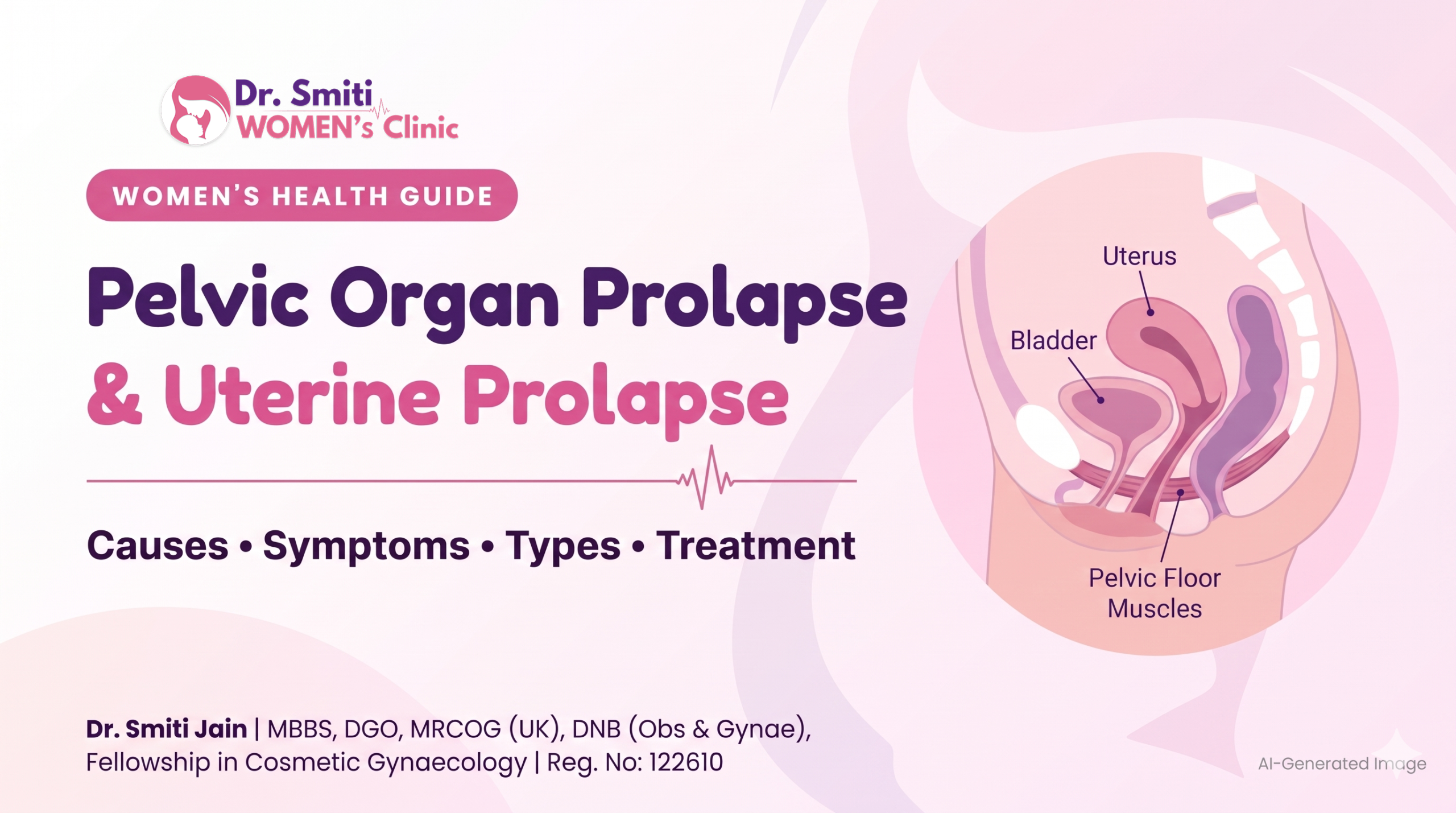
Pelvic organ prolapse happens when the muscles and ligaments that support the pelvic organs weaken, letting the uterus, bladder, rectum or vaginal top slip down into or out of the vagina. Uterine prolapse occurs when the uterus slips downward from its usual position. It commonly develops after childbirth or with ageing and can be managed through pelvic floor exercises, a pessary, or surgery.
What Is Pelvic Organ Prolapse?
Your pelvic organs, including the uterus, bladder, rectum, and vagina, are supported by a hammock-like structure of muscles, ligaments, and connective tissue called the pelvic floor. When this support weakens or becomes damaged, one or more organs may descend and bulge into the vagina. This condition is known as pelvic organ prolapse (POP).
Prolapse is not cancer and is rarely dangerous, but it can affect comfort, bladder and bowel function, intimacy, and confidence. Many women feel embarrassed and postpone seeking help, even though effective treatment options are available.
Studies suggest that nearly half of women who have given birth have some degree of prolapse, although only a portion have symptoms that bother them.
What Is Uterine Prolapse?
Uterine prolapse is a form of pelvic organ prolapse in which the uterus (womb) descends from its normal position into the vaginal canal. In advanced cases, the cervix or the whole uterus may come out through the vaginal opening.
It is graded by how far the uterus descends:
- Grade 1 (mild): The uterus drops into the upper vagina.
- Grade 2 (moderate): The cervix reaches near the vaginal opening.
- Grade 3 (severe): The cervix or part of the womb may extend beyond the vaginal opening.
- Grade 4 (complete / procidentia): The entire uterus lies outside the vagina.
Types of Pelvic Organ Prolapse
Prolapse is named after the organ that descends. More than one type can occur together.
1. Uterine prolapse
The uterus slips down into the vagina. Common after childbirth and menopause.
2. Cystocele (anterior vaginal wall prolapse)
The bladder pushes into the front wall of the vagina. It is the most common type and often causes urinary leakage or a feeling of incomplete emptying.
3. Rectocele (posterior vaginal wall prolapse)
The rectum presses into the rear wall of the vagina. It may cause constipation, straining, or the need to press on the vagina to pass stool.
4. Vaginal vault prolapse
Following removal of the uterus, the top of the vagina may lose its support and sag downward.
5. Enterocele
The small intestine pushes down between the uterus (or vaginal top) and the rectum, creating a bulge in the vagina.
6. Urethrocele
The urethra (urine tube) bulges into the vagina, often together with a cystocele (together called cystourethrocele).
Symptoms of Prolapse
In mild cases, prolapse may occur without causing noticeable symptoms. When prolapse becomes more advanced, you may experience:
- A feeling of pressure, heaviness, pulling, or fullness in the pelvis.
- A lump or bulge within the vagina, or tissue extending outside the vaginal opening.
- A feeling as though you are sitting on a small ball.
- Lower back ache that eases when lying down
- Urinary leakage when coughing, sneezing or lifting
- Frequent urination, urgency or a weak stream
- Difficulty emptying the bladder or bowel completely
- Constipation or needing to press on the vagina to pass stool
- Pain or discomfort during intercourse
- Vaginal spotting, discharge or irritation (from tissue rubbing)
Symptoms usually worsen by the end of the day, after standing for long periods, or after lifting, and ease when you lie down.
Causes of Prolapse
Prolapse results from weakening of the pelvic floor. Common causes include:
- Pregnancy and vaginal childbirth: The strongest risk factor, especially after multiple deliveries, large babies, prolonged labour or instrument-assisted delivery.
- Menopause: Falling estrogen levels reduce the strength and elasticity of pelvic tissues.
- Ageing: Muscles and ligaments naturally weaken over time.
- Chronic straining: Long-standing constipation or a chronic cough raises pressure on the pelvic floor.
- Heavy lifting: Repeated heavy lifting without proper technique.
- Obesity: Extra abdominal weight constantly pushes down on the pelvis.
- Pelvic surgery: Hysterectomy can sometimes weaken vaginal support.
- Genetics: Some women inherit weaker connective tissue, so prolapse may run in families.
How Is Prolapse Diagnosed?
Diagnosis is usually simple and mostly clinical:
- History: Your gynecologist asks about symptoms, childbirths, bladder and bowel habits.
- Pelvic examination: Done while lying down and sometimes while standing or bearing down, to see which organ is descending and how far (grading).
- Bladder assessment: If urine leakage is present, simple tests may be done to check bladder function.
- Ultrasound (pelvic sonography): Helps rule out other pelvic conditions.
- Additional tests: Urodynamic studies or imaging in selected cases.
Treatment Options for Prolapse
Treatment depends on the type and grade of prolapse, how much it bothers you, your age and overall health, and whether you plan future pregnancies.
1. Lifestyle measures and observation
For mild prolapse without bothersome symptoms, treatment may simply include:
- Maintaining a healthy weight
- Treating constipation (fibre, fluids)
- Avoiding heavy lifting and straining
- Managing a chronic cough
2. Pelvic floor exercises (Kegels)
Regular, correctly performed pelvic floor exercises strengthen supporting muscles and can reduce symptoms in mild to moderate prolapse. Guidance from a trained pelvic floor physiotherapist helps ensure the technique is right.
3. Vaginal pessary
A pessary is a soft silicone device placed in the vagina to support the prolapsed organs. It is a good non-surgical option for women who prefer to avoid surgery, are unfit for it, or want to delay it. It needs regular cleaning and periodic check-ups.
4. Local estrogen therapy
For postmenopausal women, vaginal estrogen cream or tablets may improve tissue health and comfort, and can be used along with other treatments.
5. Surgery
Surgery is recommended when symptoms are significant and other treatments do not help. The approach depends on the type of prolapse:
- Vaginal repair: Anterior (cystocele) or posterior (rectocele) repair to tighten and support weakened tissue.
- Vaginal hysterectomy with repair: Removal of the uterus for uterine prolapse, with support of the vaginal top.
- Uterus-preserving procedures: Such as sacrohysteropexy (suspending the uterus to the sacrum), which may be considered in selected women who wish to keep the uterus.
- Sacrocolpopexy (laparoscopic): Uses a mesh to lift and support the vaginal vault or uterus, offering a durable repair with a minimally invasive approach and quicker recovery.
- Sling procedures: For associated stress urinary incontinence.
Your surgeon will explain the benefits, risks and recurrence chances of each option based on your situation.
Frequently Asked Questions
Is prolapse dangerous?
Although prolapse is rarely life-threatening, untreated cases can interfere with bladder, bowel, and sexual function and reduce quality of life. Severe cases can cause urinary retention or tissue ulceration.
Can prolapse be treated without surgery?
Yes. Pelvic floor exercises, lifestyle adjustments, vaginal pessaries, and local estrogen may help manage mild to moderate prolapse.
Will prolapse go away on its own?
Prolapse usually does not go away on its own. Mild cases may stay stable or improve with exercises, but moderate to severe cases tend to need active treatment.
Can I get pregnant if I have prolapse?
Mild prolapse may not prevent pregnancy, but pregnancy and childbirth can worsen it. Discuss your plans with your gynecologist before deciding on treatment.
Can prolapse come back after surgery?
There is a chance of recurrence, especially with ongoing risk factors such as heavy lifting, constipation or obesity. A skilled surgeon, proper technique and good aftercare reduce this risk.
Which exercises help prolapse?
Pelvic floor (Kegel) exercises help the most. Avoid heavy lifting and high-impact straining until your doctor advises otherwise.


