
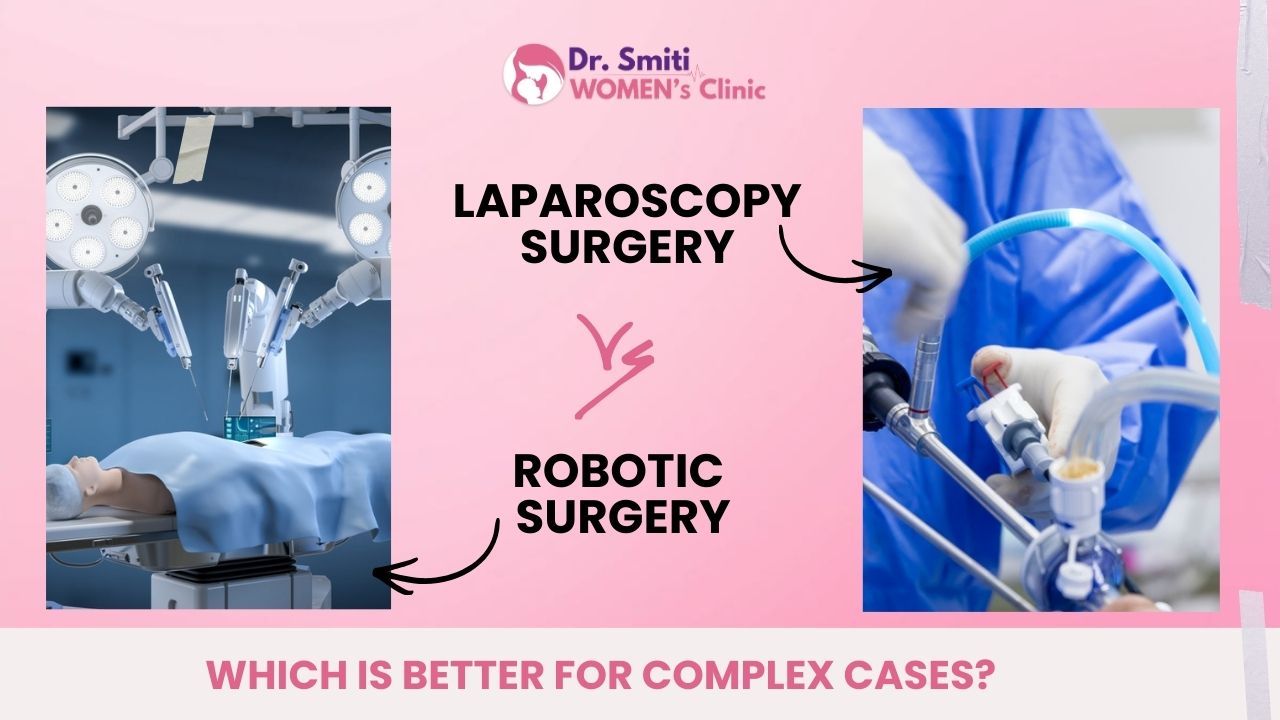
Over the past few decades, minimally invasive surgeries have completely transformed the field of medicine. By reducing recovery time, minimizing pain, and improving surgical precision, these techniques have become preferred alternatives to traditional open surgeries. Among these, laparoscopy and robotic surgery stand out as the most advanced approaches.
Both methods are keyhole techniques, using small incisions to access internal organs. They allow patients to recover faster, experience less pain, and avoid large surgical scars. However, there are key differences between them:
- Robotic surgery offers 3D visualization, superior instrument dexterity (wristed movement), and better ergonomics for the surgeon.
- Laparoscopic surgery uses 2D imaging and rigid instruments, which can limit precision in very complex procedures.
When it comes to complex cases—such as intricate cancer surgeries, advanced gynecological procedures, or complicated gastrointestinal operations—patients and surgeons often ask: which technique is truly better?
In this article, we’ll explore the fundamentals of laparoscopy and robotic surgery, discuss their advantages and limitations, and help you understand which approach is better suited for complex surgical cases.
What is Laparoscopic Surgery?
Laparoscopic surgery, often called keyhole surgery, is a minimally invasive technique in which surgeons make small incisions—usually 0.5–1 cm—to insert a tiny camera (laparoscope) and specialized surgical instruments into the body. The camera provides a live view of internal organs, letting the surgeon operate without a large incision.
Advantages of Laparoscopic Surgery
- Smaller Incisions: Leads to minimal scarring and reduced postoperative pain.
- Faster Recovery: Many patients return to routine activities within days.
- Lower Risk of Infection: Smaller incisions reduce complications and infections.
- Cost-Effective: Generally less expensive than robotic surgery, making it accessible in most hospitals.
Limitations of Laparoscopic Surgery
- Limited Precision: Instruments are rigid and have restricted movement, which can make very complex or delicate procedures challenging.
- 2D Visualization: The flat screen can make judging distances and angles more challenging.
- Steep Learning Curve: Surgeons need extensive training and experience to perform highly complex laparoscopic surgeries safely.
Laparoscopy works exceptionally well for routine procedures like gallbladder removal, appendectomy, hernia repair, and standard gynecological surgeries. However, its limitations become evident in highly complex or high-risk surgeries, where extreme precision and maneuverability are critical.
What is Robotic Surgery?
Robotic surgery is the next level of minimally invasive procedures, where surgeons control robotic arms via a console with a high-definition 3D view. These robotic instruments can move with seven degrees of freedom, mimicking the human wrist and allowing incredibly precise maneuvers that are difficult or impossible with standard laparoscopic tools.
Advantages of Robotic Surgery
- Enhanced Precision: Robotic instruments allow delicate movements and complex suturing in confined spaces.
- 3D High-Definition Visualization: Surgeons see a magnified, three-dimensional view, improving accuracy and reducing errors.
- Reduced Surgeon Fatigue: The ergonomic console allows surgeons to operate seated, decreasing strain during long procedures.
- Ideal for Complex Cases: Particularly effective for prostate surgery, cardiac procedures, advanced cancer removal, and intricate gynecological or gastrointestinal operations.
Limitations of Robotic Surgery
- Higher Cost: The robotic system and disposable instruments increase the overall cost of the procedure.
- Longer Setup Time: Preparing the robotic equipment can take longer than traditional laparoscopy.
- Limited Availability: Not all hospitals have robotic systems or surgeons trained to use them.
Robotic surgery excels in complex surgical scenarios, where precision, dexterity, and advanced visualization are crucial for better outcomes and fewer complications.
Laparoscopy vs. Robotic Surgery: Which is Better for Complex Cases?
For complex surgical cases, multiple factors must be considered, including precision, safety, surgeon skill, patient outcomes, and technology:
1. Precision
- Robotic Surgery: Offers superior dexterity and wristed instruments, allowing surgeons to perform intricate tasks with minimal risk.
- Laparoscopy: Limited by rigid instruments and 2D imaging, which can make delicate procedures more challenging.
2. Visualization
- Robotic Surgery: Provides 3D magnified vision, allowing better depth perception and tissue differentiation.
- Laparoscopy: Uses a 2D flat screen, which may limit accuracy in complex surgeries.
3. Maneuverability in Confined Spaces
- Robotic Surgery: Excellent for operating in narrow or difficult-to-access areas like the pelvis or deep abdominal cavities.
- Laparoscopy: Instruments are straight and less flexible, making some positions harder to reach.
4. Surgeon Ergonomics and Fatigue
- Robotic Surgery: Surgeons operate while seated, reducing fatigue and tremors for precise movements.
- Laparoscopy: Surgeons stand for long periods, increasing fatigue during complex or prolonged surgeries.
5. Complications and Recovery
- Both laparoscopic and robotic surgeries are minimally invasive, allowing faster recovery than traditional open surgery.
- Robotic surgery may further reduce complications in high-risk or intricate procedures, improving long-term outcomes.
6. Cost and Accessibility
- Robotic Surgery: Higher cost and limited availability may restrict access for some patients.
- Laparoscopy: More widely available and cost-effective, making it suitable for routine surgeries.
7. Operative Time
- Robotic surgery may take longer due to setup and docking of the system.
- Laparoscopic surgery is generally quicker in standard procedures but may take longer in highly complex operations due to instrument limitations.
While both laparoscopic and robotic surgeries are safe and effective, robotic surgery provides unmatched advantages for complex cases, offering superior precision, dexterity, visualization, and safety. Laparoscopy remains excellent for routine or moderately complex procedures, especially where cost and accessibility are important.
Conclusion
Minimally invasive surgery has revolutionized modern medicine, making procedures safer, faster, and less painful.
- Laparoscopy: Ideal for routine and moderately complex surgeries. Cost-effective and widely available, but limited in precision and depth perception.
- Robotic Surgery: Best suited for complex and high-risk surgeries due to advanced dexterity, 3D visualization, and reduced surgical fatigue.
Ultimately, the choice between laparoscopy and robotic surgery should be guided by the complexity of the surgery, surgeon expertise, patient health, and hospital resources. For highly intricate procedures where precision and safety are paramount, robotic surgery is generally the superior option.


