
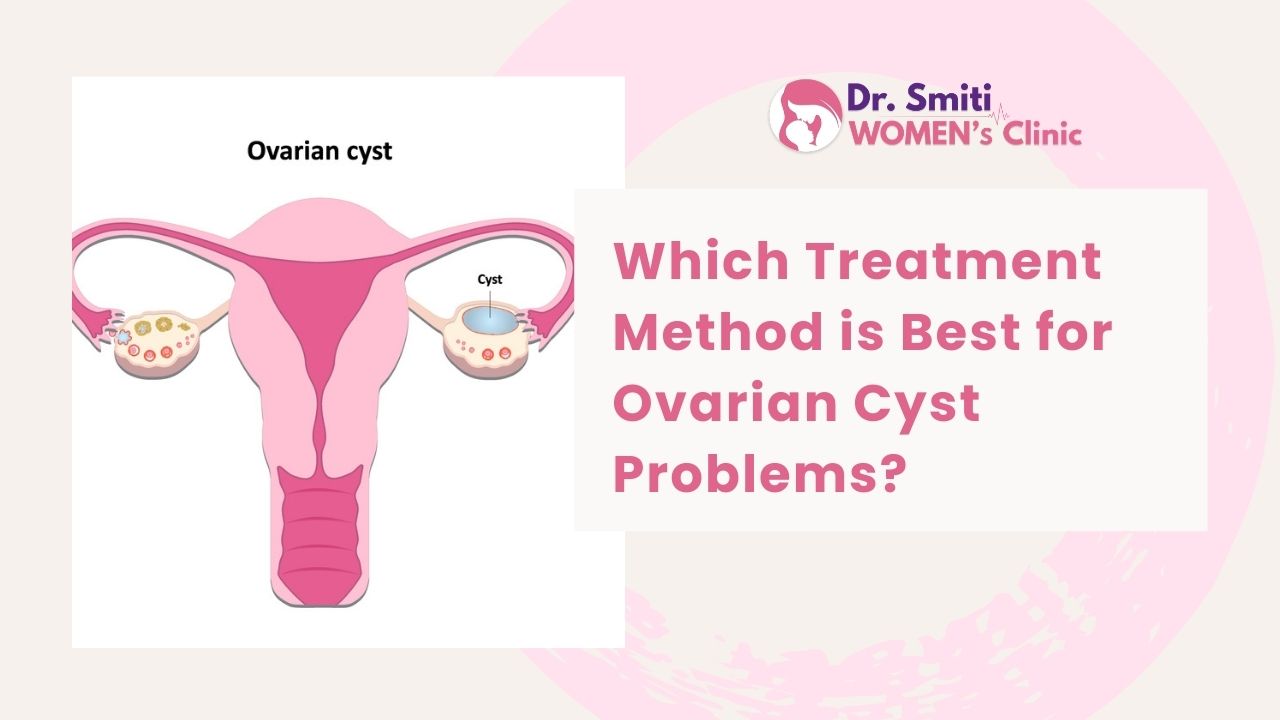
Ovarian cysts are fluid-filled sacs that form in or on the ovaries and commonly affect women, especially during reproductive years. Some disappear naturally, while others may cause pain or serious issues like rupture or twisting.
Women often experience symptoms like pelvic pain, bloating, irregular periods, or pain during intercourse. Due to these symptoms, prompt diagnosis and treatment are essential. Thankfully, with advanced medical technology, many effective treatments are available, and laparoscopy is preferred due to faster recovery and minimal invasion.
In this blog, we will discuss the best treatment methods for ovarian cyst problems and help you understand which approach might be most suitable.
Treatment Methods for Ovarian Cyst Problems
Treatment depends on the cyst’s type, size, symptoms, age of the patient, future pregnancy plans, and general health. Here are the main treatment methods:
1. Observation and Monitoring (Watchful Waiting)
Not all ovarian cysts require surgery. Many cysts, especially functional ones, go away naturally over time. Doctors often recommend regular ultrasound monitoring and check-ups to track changes in the cyst.
Key Points:
- Suitable for small, simple cysts.
- Non-invasive and no surgery is involved.
- Requires patient compliance for regular monitoring.
2. Medication
Certain ovarian cysts, especially functional cysts caused by hormonal imbalances, may respond to medications. Doctors may prescribe:
- Birth control pills may be advised to balance hormones and reduce new cyst formation.
- Pain relievers to manage discomfort caused by the cyst.
Key Points:
- Non-invasive option for symptom management.
- Does not remove the existing cyst but may prevent recurrence.
- Best for mild symptoms or small cysts.
3. Open Surgery (Laparotomy)
In cases where cysts are large, complex, or suspected to be malignant, open surgery or laparotomy may be performed. This involves a larger incision in the abdominal wall to remove the cyst.
Key Points:
- Suitable for very large or suspicious cysts.
- Invasive with a longer recovery period.
- Open surgery carries a higher risk of infection and complications than minimally invasive procedures.
4. Laparoscopy (Minimally Invasive Surgery)
Among the surgical options, laparoscopy is widely regarded as the most advanced and patient-friendly approach for treating ovarian cysts. It uses tiny cuts, a camera, and special tools to remove cysts.
Laparoscopy for Ovarian Cyst
What is Laparoscopy?
Laparoscopy, also known as keyhole surgery, is a minimally invasive surgical technique used to examine and operate on the pelvic organs. A laparoscope, a thin camera tube, is inserted through small incisions to view internal organs and perform surgery accurately.
Why is Laparoscopy the Best Choice for Ovarian Cysts?
Laparoscopy offers many benefits compared to open surgery.
- Minimally Invasive
- Only 2–3 small incisions are required, usually less than 1 cm each.
- It minimizes injury to nearby organs and tissues.
- Quick Recovery
- Most patients can go home within 24–48 hours.
- Pain and discomfort are significantly less compared to open surgery.
- Minimal Scarring
- Small incisions mean less visible scarring.
- High Precision
- Surgeons can remove the cyst carefully while preserving healthy ovarian tissue, which is especially important for women who wish to maintain fertility.
- Surgeons can remove the cyst carefully while preserving healthy ovarian tissue, which is especially important for women who wish to maintain fertility.
- Low Risk of Complications
- There is less blood loss, fewer infections, and a shorter hospital stay.fv
Types of Ovarian Cysts Treated with Laparoscopy
Laparoscopy can effectively treat:
- Functional cysts (follicular and corpus luteum cysts)
- Endometriomas (associated with endometriosis)
- Dermoid cysts (mature cystic teratomas)
- Cystadenomas (fluid-filled ovarian cysts)
The Laparoscopic Procedure
- Anesthesia: General anesthesia is used to ensure the patient is fully unconscious and comfortable during surgery.
- Small Incisions: 2–3 very small cuts are made near the belly button and lower abdomen.
- Insertion of Laparoscope: A laparoscope is inserted to examine the ovaries clearly.
- Cyst Removal: Special instruments are used to gently remove the cyst.
- Closure: The cuts are closed using stitches or surgical glue.
Procedure Duration: Usually 30 minutes to 2 hours depending on cyst size and complexity.
Recovery Time: Most patients return to normal activities within one to two weeks.
Conclusion
While ovarian cysts are common, timely treatment is important to avoid discomfort and complications, and multiple treatment options are available. However, laparoscopy has emerged as the most advanced and effective treatment method for most ovarian cyst cases.
With its minimally invasive nature, quicker recovery, precision in cyst removal, and preservation of ovarian health, laparoscopy provides women with an effective solution while minimizing risks and downtime. Women experiencing ovarian cyst symptoms should consult a gynecologist promptly to determine the best treatment approach.
If you are looking for safe, precise, and fertility-preserving treatment for ovarian cysts, laparoscopy is often the best choice in modern gynecological care.


