
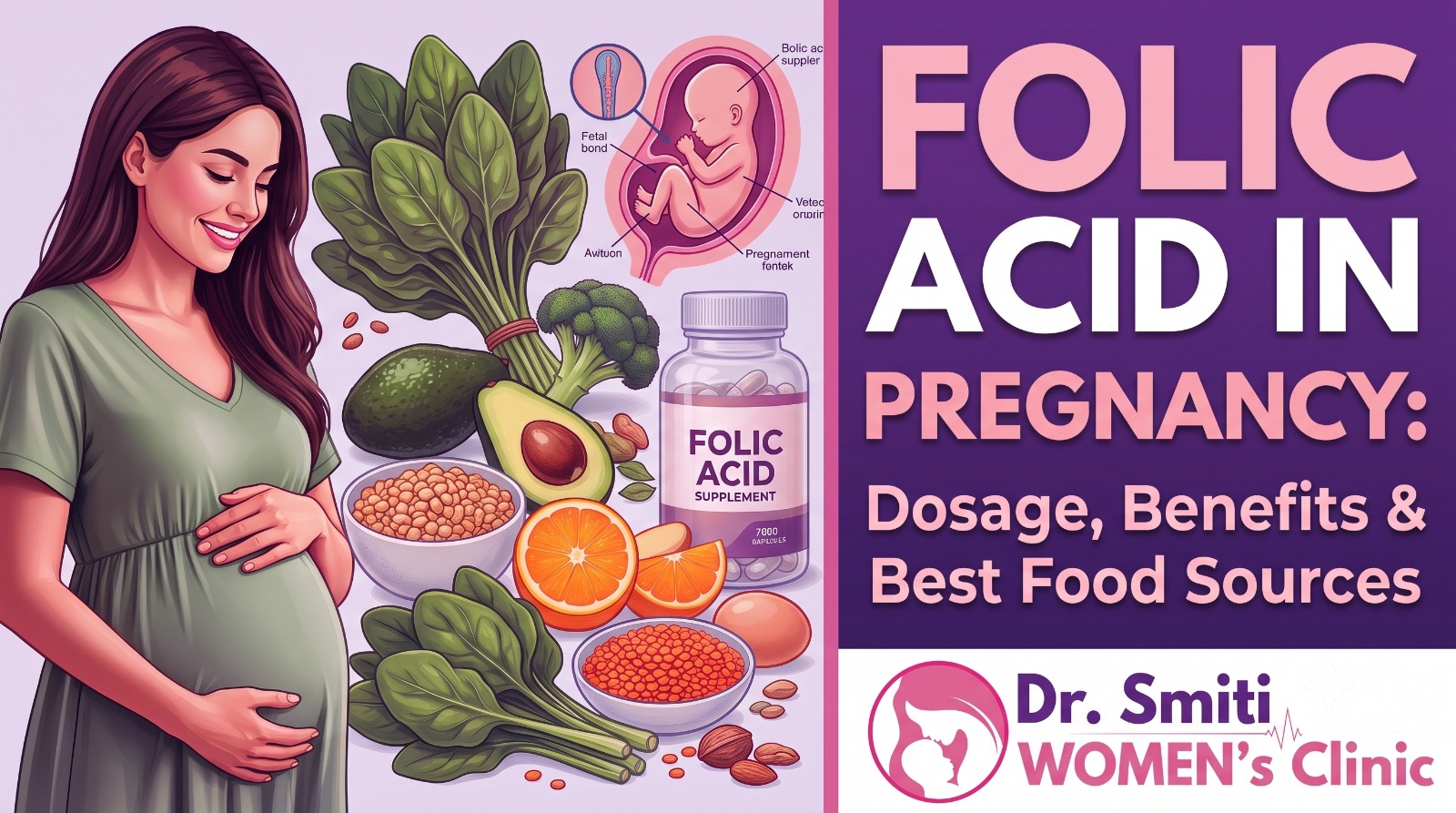
If you’re pregnant or planning a pregnancy, chances are your doctor has already told you one thing clearly: start your folic acid. It’s one of the simplest, most well-researched steps you can take for your baby’s early development — yet many women aren’t entirely sure why it matters, how much they need, or when to actually start.
This guide covers everything about folic acid for pregnant women — the science behind it, the correct dosage, food sources, and answers to the questions most commonly asked in the first trimester.
What Is Folic Acid, and How Is It Different from Folate?
Although folic acid and folate are commonly used interchangeably, they are not exactly the same.
- Folate is the naturally occurring form of vitamin B9, found in foods including leafy vegetables, legumes, and citrus fruits.
- Folic acid is the manufactured form of vitamin B9 found in supplements and fortified foods, including breads and cereals.
Both play the same essential role in the body — supporting cell growth and red blood cell production — but folic acid is generally considered more reliably absorbed and is the form most commonly recommended for folic acid supplement in pregnancy.
Why Folic Acid Matters So Much in Pregnancy
The single biggest reason folic acid and pregnancy are so closely linked is neural tube development. The neural tube is the structure that eventually becomes your baby’s brain and spinal cord, and it forms and closes within the first month of pregnancy — often before a woman even realises she’s pregnant.
When folate levels are too low during this window, the neural tube may not close properly, leading to serious birth defects:
- Spina bifida — incomplete closure of the spinal column, which can cause lifelong mobility and nerve issues.
- Anencephaly — severe underdevelopment of the brain, which is not compatible with survival.
- Encephalocele — a gap in the skull that allows brain tissue to protrude.
Because this critical development happens so early — often before a positive pregnancy test — folic acid is recommended not just during pregnancy, but ideally starting before conception too.
Beyond Neural Tube Protection
While preventing neural tube defects is the headline benefit, adequate folate intake is also associated with:
- Healthy red blood cell formation, working alongside Vitamin B12
- Supporting healthy placental development
- Contributing to the baby’s early brain and nervous system development
- Some research links to a reduced risk of preterm birth and low birth weight, though this area continues to be studied
Folic Acid Pregnancy Dose: How Much Do You Actually Need?
This is usually the most practical question, and the answer depends on your individual risk profile.
| Situation | Recommended Daily Dose | When to Take It |
| Planning pregnancy (general/low risk) | 400 mcg per day | Start at least 1 month before conception |
| First trimester (weeks 1–12) | 400 mcg per day | Continue daily through week 12 |
| Later pregnancy (months 4–9) | 600 mcg per day | Through remainder of pregnancy |
| While breastfeeding | 500 mcg per day | Throughout breastfeeding period |
| High-risk pregnancies | Up to 5 mg (5,000 mcg) per day — prescription only | Start before conception, continue through first trimester at minimum |
Who Needs a Higher Folic Acid Dosage?
A standard 400 mcg dose isn’t enough for everyone. Your doctor may prescribe a higher dosage of folic acid for pregnancy if you:
- Have previously had a pregnancy affected by a neural tube defect
- Have a personal or family history of neural tube defects
- Have diabetes (Type 1 or Type 2)
- Take medication for epilepsy
- Have a BMI above 30
- Have coeliac disease, inflammatory bowel disease, or another condition affecting nutrient absorption
- Have sickle cell disease or thalassaemia
If any of these apply to you, don’t self-adjust your dose — this is a conversation to have directly with your gynecologist.
When to Start Taking Folic Acid
Timing matters just as much as the dose itself. The neural tube typically closes between days 17 and 30 after conception — a stage most women reach before they’ve even confirmed a pregnancy.
This is exactly why folic acid for pregnant women is recommended to start before conception, not after:
- Ideally, 1–3 months before you start trying to conceive.
- Continue through at least the first 12 weeks of pregnancy.
- If your pregnancy was unplanned, start folic acid as soon as you find out, and speak to your doctor about your specific situation — the risk of neural tube defects remains low even if you start slightly later.
Best Folate-Rich Foods for Pregnancy
Eating folate-rich foods is a good foundation, but diet alone usually isn’t enough to meet the increased folate needs of pregnancy — which is why supplementation is recommended alongside, not instead of, a healthy diet.
| Food Group | Examples | Notes |
| Leafy greens | Spinach, methi (fenugreek leaves), kale, broccoli | Among the richest natural folate sources |
| Legumes & pulses | Lentils (dal), chickpeas, kidney beans (rajma), moong | Widely available and folate-dense |
| Citrus fruits | Oranges, sweet lime (mosambi), lemon | Good folate plus Vitamin C |
| Fortified grains | Fortified rice, bread, pasta, breakfast cereals | Contain added folic acid — check the label |
| Eggs | Whole eggs | Folate concentrated mainly in the yolk |
| Nuts & seeds | Groundnuts, sunflower seeds | Moderate folate, good overall nutrition |
| Other vegetables | Beetroot, avocado | Additional natural folate sources |
A cooking tip: Folate is water-soluble and breaks down with heat, so boiling vegetables can reduce their folate content significantly. Steaming or eating vegetables raw where safe helps retain more of the natural folate.
Folic Acid Tablets and Supplements for Pregnancy
For most pregnant women, a daily folic acid supplement remains the most reliable way to hit the recommended dose consistently.
A few practical points on folic acid tablets for pregnancy:
- Standard-dose (400–500 mcg) tablets are widely available over the counter at pharmacies.
- Many prenatal multivitamins already include folic acid alongside iron, Vitamin D, calcium, and iodine — check your label so you don’t unintentionally double up.
- Folic acid can be taken with or without food, though taking it alongside a meal may help with tolerance for some women.
- Consistency matters more than timing — taking it around the same time each day helps build the habit.
- Avoid taking more than 1,000 mcg per day unless specifically advised by your doctor, since very high doses can mask signs of a Vitamin B12 deficiency.
What Happens If You Don’t Take Enough Folic Acid?
This is a common worry, and it’s worth answering honestly: missing folic acid doesn’t automatically mean something will go wrong. Many pregnancies proceed without complications even with limited supplementation, partly because of dietary folate and, in many countries, food fortification.
That said, the risk of neural tube defects is measurably higher in women with low folate levels, particularly during the first four weeks of foetal development. Other possible effects of ongoing folate deficiency include:
- Increased risk of neural tube defects in the baby
- Folate-deficiency anaemia in the mother — leading to fatigue and weakness
- Higher risk of low birth weight
If you’ve already crossed the first trimester without taking folic acid regularly, don’t panic — talk to your doctor at your next visit rather than trying to “catch up” with a very high dose on your own.
Conclusion
Folic acid is an essential nutrient before and during pregnancy, especially in the first trimester when your baby’s brain and spinal cord are developing. Taking the recommended folic acid pregnancy dose and including folate-rich foods in your diet can help support healthy development and reduce the risk of neural tube defects.
Ideally, start folic acid before conception and continue as advised by your healthcare provider. If you’re pregnant or planning a pregnancy, speak with your doctor about the right folic acid supplement pregnancy and dosage for your individual needs.


